The data on how often laptops fail is more interesting than most people expect. And a little uncomfortable. It’s worth looking into, especially when you’re going the refurbished route.
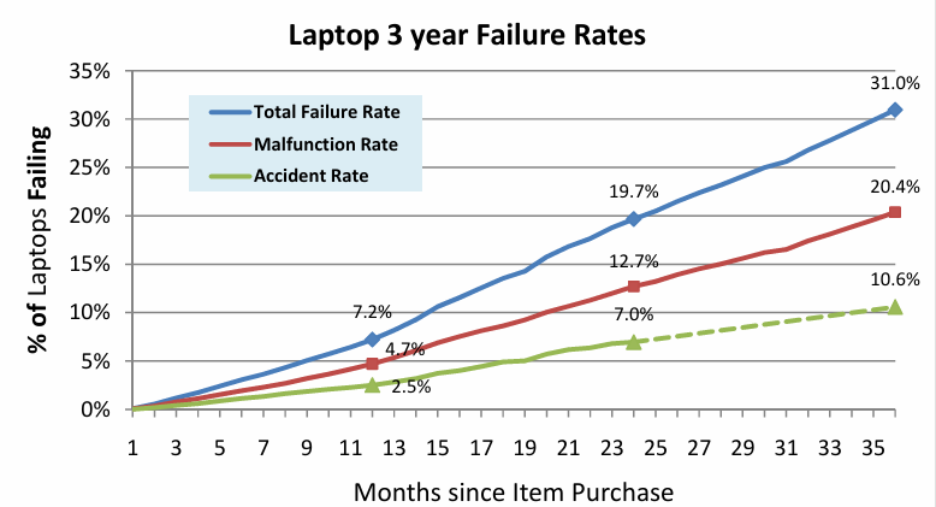
One in three newly bought laptops fail within three years. Not "might fail." Fail. This stat is from a study of more than 30,000 devices. If you're planning to buy a refurbished device and want it to last for a few years, that number is worth sitting with for a second.
If you’re already at the point where you’ve compared specs, checked condition grades, and even the seller sites, you’ve probably hit a common dilemma: do you add a protection plan or not?

Most checkout forms ask if you want to add a warranty plan. Some warranties are backed by the sellers themselves, while some are from the laptop’s manufacturer. Which do you choose? Should you even choose one?
Let's get into the data around the performance of these devices, different kinds of protection plans available, and whether you should really opt for one or not.
Refurbished builds are a popular choice
The demand for refurbished laptops keeps growing. Industry reports suggest that the market for them will grow to USD 16.71 Billion by 2031.
Their popularity isn’t surprising at all. These devices can have anywhere from a 30% to 70% discount, and if you’re going with a Grade A product, you’re getting an almost new laptop at a much lower price. A lot of consumers online also go for them for sustainability reasons.
“E-waste is a global issue and buying refurbished devices is one way we can all help reduce it. Instead of throwing old tech, refurbishing extends its life and cuts down on landfill waste. I bought refurbished laptops last year for me and my family and it’s been working great. Just make sure to buy from a reputable seller with a good warranty.”
- A user on Reddit.
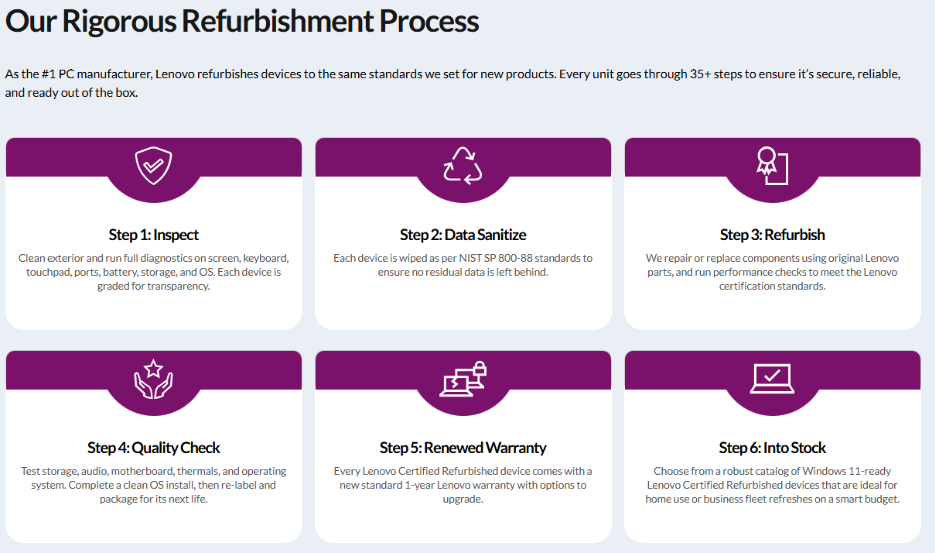
Manufacturer-certified programs run diagnostics, replace components where needed, and do quality checks before anything ships. Some companies like Lenovo promise full functionality and even explain the process of refurbishing.
Where the trouble starts
When Consumer Reports surveyed more than 58,000 laptop owners (including those with both new and used devices), they found failure rates of roughly 18 percent by year three, varying by brand. This tells us that laptops are not immune to failure, and refurbished ones are at more risk because of their age and prior usage. And when you’re buying refurbished products, you’ve got to consider that the condition or the grade given to the devices only accounts for cosmetic damage.
So how does warranty work for these laptops?
If you're buying from a reseller, you're typically getting a limited hardware warranty that lasts anywhere from 30 days to 1 year.
A standard limited warranty generally includes:
- Hardware defects
- Failures due to faulty components
- Issues tied to workmanship
If the motherboard fails without warning, the SSD dies prematurely, or the keyboard stops responding right after purchase, this warranty will help.
Standard reseller warranties usually do not cover damage classified as user error, including but not limited to:
- Normal wear and tear
- Accidental drops
- Liquid spills
- Cracked or shattered screens
- Power surges
- Cosmetic damage
The standard warranty doesn’t protect your laptop in the long run, considering that most last for a maximum of 1 year. These plans also don’t account for daily life, where your laptop moves between kitchen tables, backpacks, coworking spaces, and airplanes.
Manufacturer warranty vs. third-party protection
Third party warranty providers fill the gaps that manufacturer warranties create.
Aspect | Manufacturer | Third-Party |
|---|---|---|
Parts | OEM parts | Varies by provider |
Repair network | Select centers only | Much broader network |
Accidental damage | Usually a premium tier add-on | Frequently included |
Device eligibility | Typically manufacturer-certified only | Works across most refurbished devices |
Pricing | Premium | More competitive |
Purchase timing | At time of device purchase | Often available at checkout or after |
Claims process | Direct with brand | Through provider or retailer |
Manufacturer plans from brands like Apple, Dell, and Lenovo come with the reassurance of OEM parts and authorized repair centers. However, that reassurance doesn’t amount to much if claims get denied.
One frustrated user on Dell’s support forum shared:
“My laptop is essentially unusable for its intended purpose, and this has been a significant inconvenience, wasted time, and financial loss for me. In the past, I attempted to have this issue addressed under the standard warranty, but found the process excessively difficult and ultimately gave up. I attempted to have this issue addressed under the standard warranty, but found the process excessively difficult and ultimately gave up. Later, I purchased an extended warranty from them in an attempt to resolve the problem, but again encountered the same barriers and abandoned the claim due to the hurdles involved.”
Third-party and retailer plans tend to be more flexible with warranty eligibility and can have more structured claims processes. Some providers like SureBright ensure coverage for up to 3 years, according to the plan you choose.
Standard warranty vs extended warranty vs accidental damage protection
Feature | Standard warranty | Extended warranty | Accidental damage protection |
|---|---|---|---|
Who provides it | Manufacturer or reseller | Manufacturer or third party | Manufacturer or third party |
Typical duration | 30 days to 1 year | +1 to +3 additional years | 1–3 years |
Covers hardware defects | Yes | Yes | Yes |
Covers manufacturing faults | Yes | Yes | Yes |
Covers accidental drops | No | No | Yes |
Covers liquid spills | No | No | Yes |
Covers cracked screens from impact | No | No | Yes |
Wear and cosmetic damage | No | No | No |
Making the decision
You’ve got to understand your own requirements when you’re considering whether an extended warranty makes sense or not.
You should probably get a warranty plan if you:
- Want to use the device as your primary work or school machine
- Are a freelancer or remote worker where downtime is a direct problem
- Travel regularly or carry it with you daily
- Don't have a backup device
The real cost of a failure in these situations isn't just the repair. It's a missed deadline, a dropped client call, or a lost workday. The inconvenience multiplies fast when this is the device your income or coursework runs through.
Skipping it makes sense if you:
- Want to use it as a secondary or short-term device
- Cycle through hardware regularly anyway
- Are getting a Grade D laptop
- The cost of the warranty is higher than the laptop
- Are genuinely comfortable absorbing a repair cost if it comes up
Ask yourself these questions
Read these three questions, and answer them honestly:
1. “If this laptop dies, maybe because of a hardware failure or an accident, what do I actually do next?” Not hypothetically. Concretely. Do you have a plan?
2. “Is this device essential to how I work, study, or earn money?” Because if it is, the disruption cost is real even before you count the repair.
3. Am I skipping coverage because it doesn't make sense, or because I just don't want to think about it right now? Being honest about this from the start makes it easier for when you might face an issue later.
In conclusion
Warranties are not a fear purchase, nor an upsell. When you look at the data, you see that laptop failure rates are significant within a three-year window. And regardless of what the cause of the failure is, standard refurbished laptop warranties don't cover any of it.
Buying refurbished is a cost efficient move, and you won’t regret your choice if you have the right protection.