What does delivery exception mean? In essence, it is a tracking status that shows a shipping issue preventing your package from reaching its destination as planned.
Houston, we have a shipping problem.
It's T-minus 15 minutes. The order's placed. The warehouse has picked, packed, and handed it off. The carrier has it. The tracking link is live. Everything is go for launch.
Three... two... one...
But wait... now there’s only a blinking status on a tracking page which shows two words that have been ruining trust for ecommerce businesses since time immemorial:
Delivery exception.
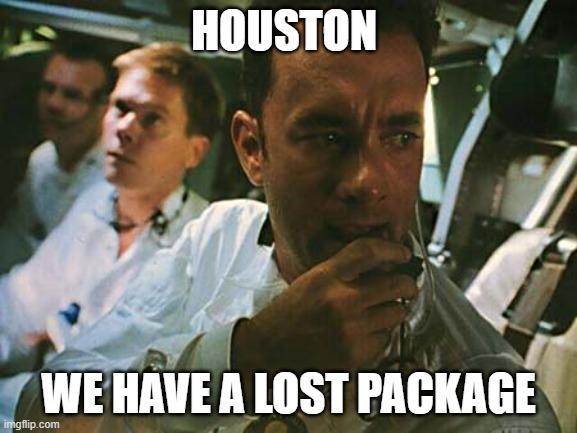
That flag looks identical whether it came from FedEx, UPS, or DHL. It follows the same language, same clinical calm, even the same complete absence of useful information. But what happens next is a completely different story across all three.
Which raises a very obvious problem: Isn't this just a carrier problem, though?
I wish it were that simple. But I wouldn't be writing this if it were.
Failed deliveries account for 8–20% of shipments depending on geography, with each unsuccessful attempt costing an average of $17.78 once you factor in re-delivery, customer service time, and lost sales. And yes you guessed it right- that's just the direct hit.
And here's what makes it worse: half the time, the exception isn't even the problem. It is the unnerving silence around it. Because that's what coverts a two-day delay into a chargeback or a one-star review.
So, does it still feel like a carrier problem?
This guide exists because the standard advice out there - "contact your carrier," "provide accurate addresses," "communicate with customers" - is the logistics equivalent of telling a pilot to "just fly better." Technically true. Completely useless at 30,000 feet with an engine out.
What you actually need is to know how FedEx, UPS, and DHL each handle delivery exceptions differently, which carrier's resolution process is going to cost you the least sleep, what each of their exception codes actually means and when to act, and what your business is really losing every time one of them drops the ball.
That's what this is... a side-by-side breakdown of all three carriers and what you can do to stop absorbing a cost that was never yours to carry in the first place.
So, buckle up. Mission control is back online.
But first: Why delivery exceptions happen – let's talk about the 3 buckets
Every exception traces back to one of three sources:
- Bucket 1 - Carrier-side: Weather, route disruptions, hub congestion, vehicle breakdowns, staffing shortages. You cannot prevent these. You can prepare for them with proactive communication.
- Bucket 2 - Merchant-side: Incorrect address data passed to the carrier, missing or wrong HS codes on international DHL shipments, non-compliant packaging that triggers a FedEx dimensional weight flag, customs documentation errors. A conservative estimate puts merchant-introduced data errors at the root of 30–40% of exceptions that get blamed entirely on carriers. Fix these upstream and your exception rate drops.
- Bucket 3 - Customer-side: Wrong address entered at checkout, nobody home for a signature-required delivery, refused package. You can influence these with address validation at checkout, preset alerts to the customer when the package is about to be delivered, offer pickup option at collection points or drop boxes, or just offer clear delivery instructions.
While you can easily manage bucket three and two with better communication and transparency, it is bucket one where the trick actually lies.
FedEx delivery exceptions: How they handle it
FedEx runs one of the most granular exception tracking systems of the three carriers, which is both its strength and occasionally its weakness. You get detail... sometimes more detail than you know what to do with as it happened with this customer:
“This package was supposed to arrive on Saturday. Friday I noticed this shipment exception [...] I tried contacting customer service and the were of no help at all. [...] Instead they felt the need to be condescending and send me the definition of what “unable to delivery” meant and give me some BS about how the shipper chose economy shipping and the routes the package may take might not appear to make sense.”
Yes, sometimes being too transparent can backfire.
On the bright side, FedEx Delivery Manager gives customers free text and email alerts tied directly to shipment tracking, including notifications when delivery exceptions occur. It also lets recipients redirect eligible packages to FedEx pickup locations, place vacation holds, and save delivery instructions for future shipments. Yet many merchants still don't proactively educate customers about these tools, which means they're often learning about exceptions from angry emails instead of getting ahead of them. That's a fixable problem that takes about ten minutes.
That being said, here are other FedEx delivery exceptions:
Exception status | What it means | Merchant action | Urgency |
|---|---|---|---|
Weather delay | Route or hub disruption | Proactive customer comms, no escalation yet | Low |
Incorrect address | Address can't be matched | Correct via Delivery Manager immediately | High |
PMX | Evening delivery constraint, returning to depot | Expect next-day reattempt, notify customer | Low |
Signature Required / No one home | Failed delivery attempt | Notify customer, offer FedEx Hold at Location | Medium |
Clearance delay | Customs or import hold | Check documentation, contact broker | High |
Operational delay | Internal FedEx hub or capacity issue | Monitor; escalate at T+48 if unresolved | Medium |
Damaged package | Flagged during handling | File claim immediately, notify customer | High |
Remember: FedEx holds packages with unresolved address issues for up to five business days at the local facility. After that, the package is automatically returned to the sender.
UPS delivery exceptions

UPS exceptions commonly stem from wrong addresses, damaged packages, or missing signatures - a different profile from FedEx, and one that carries specific implications for how you respond. To understand why, let's hear from the unofficial spokesperson for delayed deliveries: one very frustrated customer...
“UPS has joined our national pastime of screwing their customers. It's grown fast and wide and we all know who our prime example is. But I don't understand why a simple lost package cannot simply be paid for after it was lost. To whom can we pass the buck Windmills? Sharks? Where will UPS put the blame?”
I know one place where the blame can go whether UPS says anything or not: your business. According to a report, 77% of consumers will abandon future purchases from a retailer that failed to deliver on time. Meaning, a single mishandled exception is, statistically, a customer you're probably not getting back because they think it is all your fault.
Before we get into the solution, here are a few more ways UPS delivery exception that, if left unaddressed, can help you gather a fan-following of disgruntled customers.
Exception status | What it means | Merchant action | Urgency |
|---|---|---|---|
Address Unknown | Address cannot be matched by the UPS system | Correct the address before the first delivery attempt using UPS Intercept | High |
Damage to Shipment | Package was flagged as damaged during transit | File a claim and retain all packaging for inspection | High |
Signature Not Received | No one was available to provide the required signature | Notify the customer and consider redirecting to a UPS Access Point | Medium |
Receiver Not Available | Attempted, no one present | Reattempt scheduled, notify customer | Medium |
Weather Delay | Route disruption | Customer comms, no escalation needed | Low |
Held at UPS Access Point | Package waiting at nearby UPS location | Notify customer - 7-day pickup window | Medium |
Return to Sender Initiated | Unresolved exception, package returning | Act immediately or shipment is lost | High |
So, what’s the solution? It’s simple: stop self-insuring a risk you don't need to carry. Just like for the customer above, 92% of ecommerce merchants incur significant costs due to lost, stolen, refunds or damaged shipments. That’s exactly when you can save yourself from becoming a statistic by covering packages against damage, loss, or theft with shipping protection.
Lastly, let’s talk about DHL delivery exceptions & how they handle it
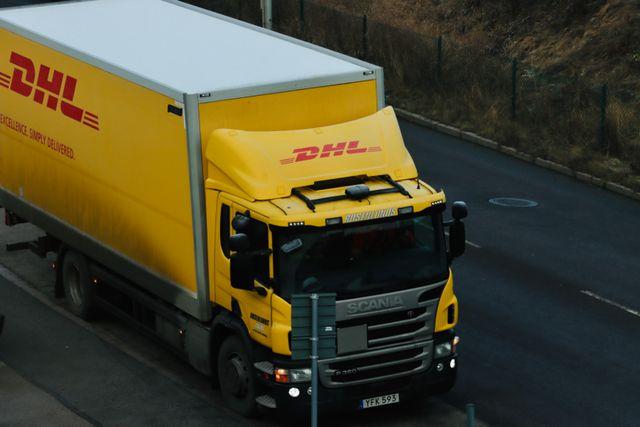
DHL is a different species in the logistic kingdom and understanding why makes the shipping exceptions far less mysterious. DHL's primary business is international shipping, cross-border, customs-heavy, documentation-dependent.
Where FedEx and UPS exceptions are often resolved by the carrier without merchant involvement, DHL exceptions, particularly on international shipments, frequently require you to act, just like how this merchant should have done:
"With no shame they delivered open box, battery and engine missing. Rest of the bike is cracked. I will get replacement, but still would like to complain to dhl, does anyone know a way to contact them? It seems they blocked the numbers and emails."
And if you scroll a little further down that thread, past the frustration and finger-pointing, you'll find a rare sight on today's internet: someone making a sensible point.
"You aren't DHL's customer, the seller is. If the seller is sending you a replacement, leave the complaining to them."
The commenter is right.
And the moment they realize that, that's when the delivery exception will eventually find its way back to the your doorstep.
But wait, here’s some salt to add to that burn, their resolution process could be a bit better than the other two companies as their Trustpilot score of 1.3 out of 5 (FedEx has 1.2 and UPS 1.1). So, all you need to do is keep your customers informed in case of a DHL exception.
That being said, here’s a table to help you figure out different delivery exceptions:
Exception Status | What It Means | Merchant Action | Urgency |
|---|---|---|---|
Shipment on Hold | General hold, customs or address | Contact DHL, verify documentation and address | High |
Customs Delay | Clearance pending, duties or docs issue | Confirm HS codes, check for unpaid duties | High |
Attempted Delivery / Not Available | Driver came, no one home | Notify customer, reschedule immediately | Medium |
Address Issue | Address undeliverable as written | Correct before return window closes | High |
Prohibited/Restricted Item | Item flagged at customs or inspection | Contact DHL compliance, time sensitive | High |
Future Delivery Requested | Delivery rescheduled | Monitor, no action needed | Low |
Weather Delay | Route disruption | Customer comms only | Low |
Shipment Damaged | Flagged during transit | File claim, notify customer proactively | High |
But what are these delivery exceptions really costing your business?
Most merchants track exceptions by volume. Almost none of them track exceptions by cost.
The formula here is: Total Exception Cost = (Reship Rate × Carrier Cost) + (Refund Rate × AOV) + (Exceptions × 1.3 tickets × Handle Time × Agent Rate) + (Churned Customers × LTV)
So let’s say you're shipping 2,000 orders a month at a 3% exception rate. That's 60 exceptions. Manageable, right? Here's what those 60 exceptions actually cost:
About 30% require a reship. At $12 per shipment, that's $216. Another 20% end in refunds. At a $55 average order value, that's another $660.
You're already at $876.
Then come the support tickets. Exception-related issues generate roughly 1.3 customer inquiries each. At 12 minutes per ticket and an $18/hour support cost, that's another $280.
And then there's the cost nobody tracks: lost customers. If just 15% of those 60 exception-affected customers never buy again, and your average customer lifetime value is $180, that's $1,620 in lost future revenue.
Suddenly, what looked like a shipping hiccup has become a $2,776 monthly problem or more than $33,000 a year.
Yes, those delivery exception can be pretty expensive.
How to reduce your exception rate long-term?
The highest-ROI moves are:
- Address validation at checkout: It eliminates the most common merchant-caused exception across all three carriers before it ever reaches a driver.
- Clean customs documentation: HS code errors pile up easily and cause a disproportionate share of DHL exceptions. Audit your codes per SKU annually at minimum.
- Recheck UPS packaging compliance: If UPS is in your carrier mix, re-educating yourself with their packaging policy, exceptions, and how they resolve it can help before you ship a particular product/s.
- Run a monthly exception review by carrier, cause code, and SKU: If FedEx is running a 5% exception rate in your mix while UPS runs 2% on comparable routes after adding the upfront delivery cost and the time taken to deliver, that's a data point that should be driving carrier allocation decisions.
- Diversify your carrier mix strategically: Single-carrier dependence means single-carrier exception spikes hit your entire operation. Splitting volume across two carriers for domestic ground gives you both a fallback and a performance benchmark.
But even the best-run operations will see exceptions. At a certain scale, shipping issues stop being an occasional headache and start becoming a statistical certainty. That's exactly where shipping protection earns its place.
SureBright's shipping protection covers the gap between what carriers pay out and what exceptions actually cost you. If you're shipping at any real volume and absorbing exception costs out of pocket, you're effectively funding your carrier's mistakes.
So, protect your shipments with SureBright. Schedule your demo today.