It’s been more than a year since the United States government announced tariffs.
Ever since then we’ve had some high highs, rock-bottom lows for many, and a mixture of the two for most. Regardless of the outcome, nearly every merchant spent time brainstorming on how to work around the trade policies.
To merchants within the US market, fluctuating costs and rerouted business strategies became a normal experience.
Merchants still regularly post about it online, apart from the closed door discussions with their trusted ones. Even as a lot of businesses shut shop, others rode last year’s waves of BFCM and the holiday season, to eventually come out on top.
And then on February 20, 2026, the Supreme Court ruled 6-3 in Learning Resources v. Trump that IEEPA never authorized the President to impose tariffs, making every IEEPA tariff invalid from the day it was imposed.
But the damage had been done. Roughly 330,000 importers paid about $166 billion in IEEPA duties across more than 53 million entries.
One frustrated merchant put it very clearly when asked about the impact of the tariffs:
“Destroyed my margins and I closed up shop.”
This story wasn’t either the first, nor will it be the last for a bunch of businesses with the new legislation granting President Trump with powers to enforce new tariffs. But is this narrative the predominant experience for most, or is it just the loudest?
Let’s unpack the answer through the real experiences of merchants who dealt with the uncertainty of US tariffs.
The tariffs shocked everyone at first
When they were announced, tariffs made headlines all over the world. Everyone and their grandma talked about it. It was a rough situation to be in if you didn’t have US-based manufacturing. But most businesses still found a way around this. In fact, 70.4% of sellers said tariffs had enhanced supply chain resilience.
But when the de minimis exemption was axed, panic ensued. The exemption was the backbone of cheap cross-border ecommerce for a long time. Foreign sellers could ship direct to customers as long as each package stayed under $800 and avoid customs paperwork and duties in the process. It just wasn’t a big deal two years ago, like it has been for the past year.
“We rode the de minimis rule for more than 10 years....its been dirt cheap to drop ship to the States from China. No other country has anything close.”
- A concerned clothing brand owner on Reddit.
This was a huge change as compared to FY2024: According to Reuters, 1.36 billion shipments worth a total of $64.6 billion entered the US duty-free under that exemption, with about 73% originating from China alone.
The tariffs shut doors for many; Especially dropshippers, artists, and brands selling handicrafts. In the US alone, 700 businesses went bankrupt after the policies came into effect, showing a 14% increase since 2025.
“I've literally stopped selling. I'm out of product and the materials I need to import with the tariffs are too much. I DO make my product in America but where in America is there a bamboo farm that makes cloth?? I'm livid. I'm back to working in engineering and I hate it.”
- A merchant venting on Reddit.
And then Canada went from workaround to worst case
Plenty of sellers moved sourcing north in 2025 to get out from under China exposure. That looked smart for about a year.
But talks between Washington and Ottawa collapsed in August. There's now a 50% tariff on Canadian goods, with Canada matching on $27.6 billion worth of trade going the other way. Bans on Canadian dairy, alcohol and auto imports are planned for later this month.
The lesson isn't "diversify your suppliers." Everyone already knew that.
The lesson is that country-level diversification doesn't help when the tool being used is country-level.
The Congress also closed the loophole that got your money back
Every dollar being refunded is coming back because the authority behind it didn't exist. The Supreme Court didn't say the tariffs were bad policy. It said the President never had the power to impose them that way.
Congress has now handed over that power directly.
The Lindsey O. Graham Sanctioning Russia and Iran Act of 2026 passed the Senate. It authorizes tariffs of up to 100% on countries that rank among the five largest importers of Russian crude, with India and China the obvious targets.
Democratic opposition was mostly about exactly that. Congressman Richard Neal said the problem wasn't the sanctions, it was handing this president more tariff authority. An amendment that would have named ten specific countries, including India, China, Turkiye and the UAE, was voted down in committee 3-7.
If you import from India, you're already at 50% after a secondary duty landed on top of the earlier rate. The ceiling just doubled.
How different industries reacted
Even though some segments faced more hiccups than others, almost every single one has its own set of challenges. Here are a few merchant voices across industries:
Electronics & gadgets
Electronics brands that followed D2C models or used international fulfillment models now pay tariffs and compliance fees on every device or accessory. According to the International Trade Center, China is the leading producer of electronics. And we all know how the US feels about China.
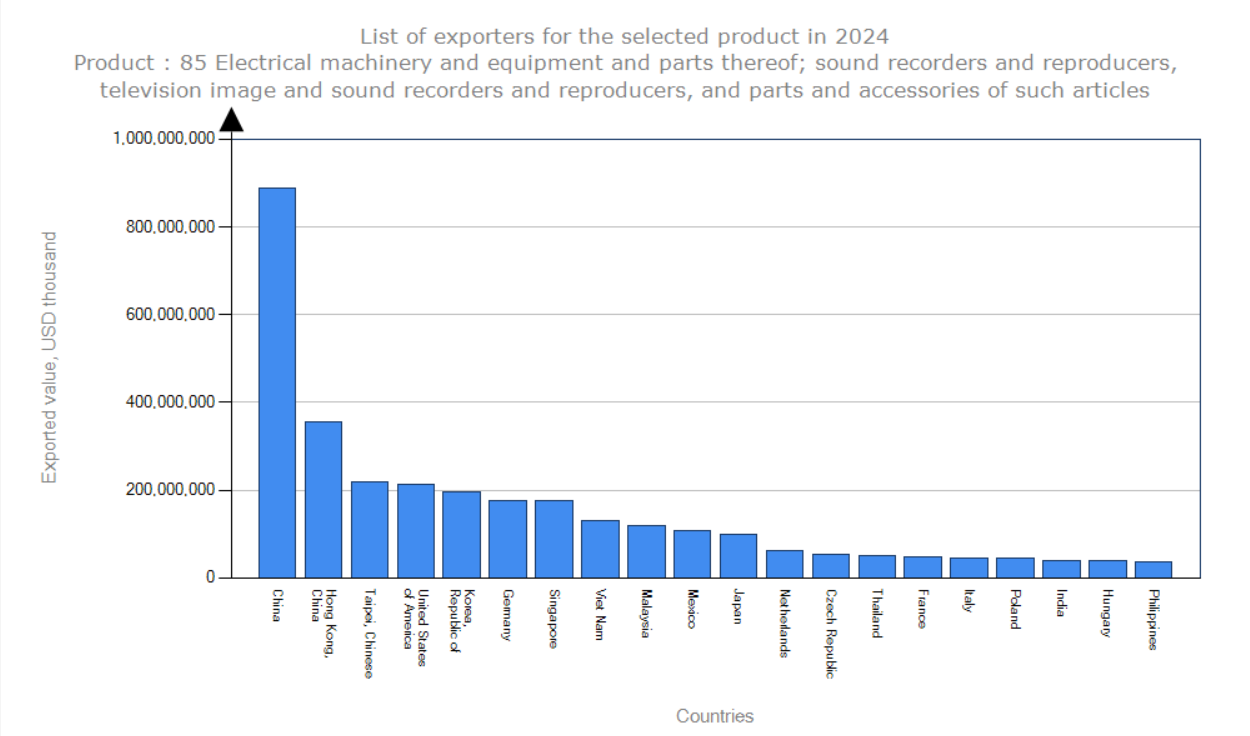
When the United States set charges of 145% on semiconductors, China retaliated with tariff rates of 125% on raw materials from America. If this goes on any longer, the entire global semiconductor market could shrink by as much as 34% in 2026.
You can see this clash especially when you check out the pricing of computer parts. RAM prices are 4.4 times higher in January 2026 than they were 6 months before.
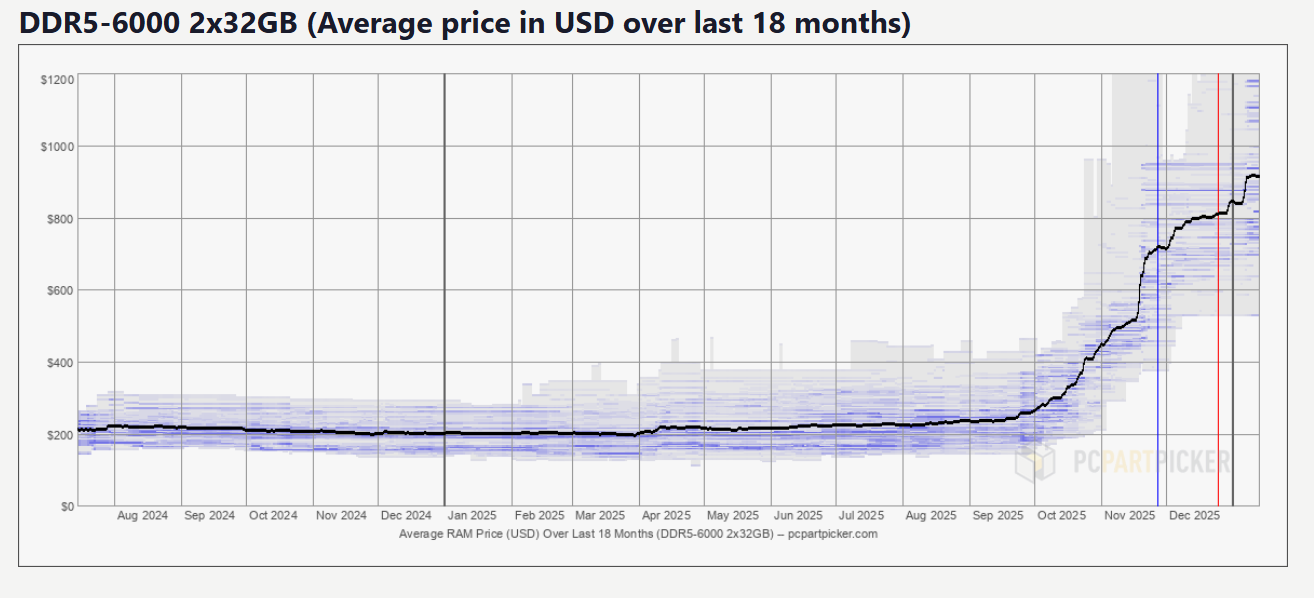
SMB merchants tend to suffer the most in this geopolitical struggle because they don’t have the reach of bigger businesses.
Apparel & textiles
For clothing, small brands that got imports from abroad saw costs balloon up as well.
“Clothing brands like mine are getting crushed right now. U.S. tariffs. And if you’re sourcing from places like India, you probably know exactly what I’m talking about. Cotton fabrics up 10 percent. Polyester blends 15 percent. Wool suiting 16 percent. Certain synthetics up to 32 percent.”
- A frustrated garment brand owner on Reddit.
Artisanal and handmade goods
Craftsmen and independent sellers aren’t exempt from the tariffs either. Artists who source paints, varnishes, and beads from abroad can’t do so without spending more.
“I live in Europe and have put everything into building my handmade brand shop. Until recently, 90% of my sales were to the US. But since the abrupt end of the $800 de minimis exception, and with almost every country in the world suspending shipping to the US, my sales have nearly stopped overnight, like someone flipped a switch.”
- A devastated business owner on Reddit.
Food & beverages
A lot of F&B businesses have been losing sales. Luckily, the government did roll back the 10- 40% tariffs on items. A few merchants still dealt with the consequences:
“We simply do not grow the ingredients I need to manufacture. Hence, I needed to raise prices. Unless we start planting mango and coconut trees, there is no relief in sight.”
What the ones who survived the tariffs did differently
Nobody could afford to freeze when tariffs were announced. Businesses found different approaches to selling to keep their shops running.
Some of these strategies include:
They bought ahead of the deadlines
Large retailers imported early shipments and ate some of the cost, which is a large part of why consumer spending held up better than expected. The small sellers who did the same thing had a quarter or two of breathing room to reprice properly instead of overnight.
They made upfront charges
They updated price displays at checkout to show duties and fees upfront. This helped in communicating with customers to avoid surprises. While customers are hesitant to buy more products with this change, at least they won’t make angry calls after they receive the item.
They made supply chain reorganization
Sellers have been working on restructuring supply chains to import in bulk, clear customs once, and then fulfill domestically.
“My supplier in the US used the tariff to raise their prices. Even though the tariff was cancelled on our products. So currently looking at other countries to bring in supplies instead of the US. But also looking to move past the US as a supplier as it’s an unstable market to buy stuff from currently and maybe forever. Sucks but it’s your country. I will not dictate from my country how you want it to be. But I will be moving on.”
- A Canadian merchant on Reddit.
They focused on product safety and support after delivery
Merchants are opting for third-party warranty and protection offerings to reassure customers that they are backed even if the product arrives damaged.
“In my experience, almost no one takes advantage of warranties, but they help tremendously as a purchase closer. We saw absolutely no returns in the second year.”
- A salesperson on Reddit.
Aside from supporting customers, reliable warranty providers like SureBright take care of the claims process entirely. This would reduce any possible issues after the sale happens. If something does go very wrong, it’s not your headache to deal with the situation.
They kept their paperwork clean
This one only became obvious in hindsight. The refunds arriving now are going to importers who can produce entry summaries and match duty lines to authorities. Anyone who can't is filing blind against a 90-day window.
They stopped trying to protect every SKU
Tiered pricing beat blanket increases. Absorb the hit on high-margin products and use them to hold customers, split it in the middle, pass it through at the bottom. Carter's took the same logic to its catalog, cutting product offerings by 20-30% as part of a restructuring that named tariffs as a major factor.
They found margin that tariffs couldn't touch.
Every landed cost in your catalog is exposed. Duty applies to goods, and goods are most of what you sell.
Not all of it, though. Protection plans, extended warranties and service contracts aren't imported. When landed costs swung 30 to 50 points and repricing the catalog meant losing customers, the parts of the basket that weren't goods became worth a lot more than they used to be.
It's a small lever. It's also one of the few that works on orders you've already won, without touching your prices or your ad spend.
Final thoughts
While there isn’t a clear path forward, merchants are using whichever strategies they can to grow their businesses.
And while tariffs made sellers across the world anxious, many took this challenge in their stride and grew more resilient.
The three things that did work for most merchants were to stay transparent, reduce post purchase chaos, and reorganize the way they work.
If you know a fellow merchant who could benefit from reading this article, send it their way.