Should you join a retail buying group? Benefits, drawbacks, and hidden costs

Overview of Contents
Here, in the vast and unforgiving ocean of retail, there are many small independent stores that regrettably get eaten for lunch by bigger stores. These giants buy products by the truckload and pay less for every unit, which leaves the little stores wondering how they can sell a product at competitive prices and survive.
Think of it this way - two liquor stores on the same street are selling the same bottle of bourbon from the same supplier. The chain store on the corner pays less for that bottle, and the family shop three doors down the lane knows it, but can’t get the price parity.
Fortunately, the FTC settled a case over exactly that kind of gap. It reached a settlement with Southern Glazer’s, the country’s largest wine and spirits distributor, that limits its ability to charge small independent retailers more than competing large chains. The law behind it dates back to 1936.
But most store owners can’t wait 90 years for a regulator to step in. So they join a buying group.
What are buying groups?
A retail buying group is a team of independent stores that pool their purchases to get chain-level prices and perks, while each store keeps its own name and makes its own calls.
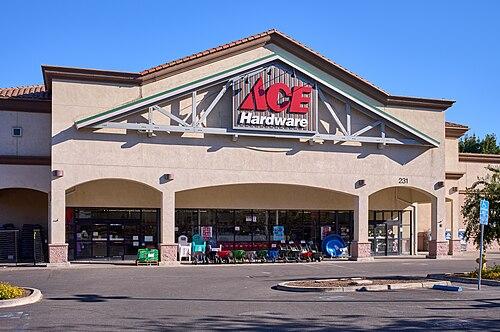
The idea found its roots back in 1924 when a small group of Chicago hardware store owners started buying merchandise in bulk together to get the lowest possible price. That group became Ace Hardware, now the world’s largest retailer-owned hardware cooperative.
If you run an online store, a rep has probably pitched you about joining one. We work with some leading buying groups in the USA, including ProSource and HTSA, as their warranty partner, so we’ve seen what members actually use and what they leave on the table. In this guide, we’ve put together how these groups work, what they cost, and how to tell whether you’d be a perfect fit.
How are buying groups different from other groups?
A buying group sits somewhere between going solo and handing your store over to a franchisor. You stay the owner and run your own business, and the group negotiates with suppliers on behalf of all its members. Most of the savings come back to you later as rebates, which are refunds based on how much you bought, rather than as a lower price on each invoice.
In essence, buying groups help you improve your margins while reducing the headache of supplier negotiations.
Over time, many groups have also grown well beyond buying. For instance, HTSA, an international trade consortium, offers its members training, marketing and financing programs along with better prices.
The confusion usually starts with organizations similar to the buying group- the co-op, and the franchise. A co-op is a buying group owned by its members. At Do it Best, for example, independent hardware stores became members of the cooperative and are its sole shareholders. A franchise is entirely a different thing. Franchisees pay to use another company's brand, business model, and operating systems, and must follow its rules. They're essentially running a business under someone else's playbook, rather than joining forces with other independent retailers to negotiate better deals.
Here's a table to help you differentiate better - buying group vs cooperative vs franchise
Factors | Buying group | Cooperative | Franchise |
|---|---|---|---|
Who owns it | Varies: members, a company, or investors | The member stores | The franchisor |
Whose name is on your door | Yours | Usually yours, sometimes a shared banner | The franchisor’s |
Who calls the shots | You | You, plus a vote in the co-op | Largely the franchisor |
Where do the profits go | Depends on how it’s structured | Back to members | Fees and royalties go to the franchisor |
Example | ProSource | Ace Hardware, Do it Best | Any fast-food chain |
What buying group membership costs
The fees are rarely just membership charges. Take Azione Unlimited, an AV buying group. When it last published its terms, it charged $3,000 a year and asked for at least three years in business, sales of $1.5 million and up, and a willingness to focus on group vendors.
Buying groups get discounts by directing members to certain vendors, which means you are nudged to buy from specific suppliers- so everyone can get a good discount.
Bigger groups often set the bar by revenue. One recent ProSource intake was made up of integrators all generating a minimum of $1,000,000 in annual sales, while its top “Power Dealer” tier is for those generating at least $4 million in revenue.
Then there’s the rebate fine print. Royal Buying Group, which serves convenience stores, pays rebates quarterly, deducts a 10% administrative fee, and excludes purchases from wholesale clubs. To put it simply, you pay for inventory upfront and may wait months to get some of that money back. If cash is tight, that delay can hurt more than the membership fees.
And when a buying group is free to join, check who’s footing the bill. Many groups earn money through administrative fees paid by their vendors. There’s nothing automatically wrong with that, but it can limit your choices to the vendors the group works with.
Do they actually help retailers grow? Here's what the research says
The best independent evidence comes from a 2015 Journal of Marketing study that followed Europe’s largest grocery retailers for 15 years. On average, buying groups did generate scale advantages, raising members’ productivity and sales and lowering their cost of goods sold.
But retailers benefited less when members varied widely in size, or the group spread across too many markets. Also, the smaller members faced a contradictory situation where the smaller they were within the group, and the more they overlapped with other members, the less they benefited.
A study of 241 Japanese supermarkets found that independent retailers did better when they used their buying group’s resources and shared information effectively. In other words, the more you put the group’s programs to work, the more value you get from your membership.
So the takeaway from all of this is that a group’s buying power only helps you as much as your share of it and alignment with existing suppliers.
How to find out where you stack up against the rest of the partners
We built this test from the research above. Here's how to find out where you stand:
1. How big are you next to the typical member?
If you are a smaller retailer, the volume tiers and vendor attention is probably designed for someone else.
2. How much would you overlap with other members?
The more you look like your fellow members, the less you gain, as per the study.
3. How many markets does the group try to cover?
A group serving everyone from mattress stores to marine dealers tends to run generic programs.
4. How much of your buying would actually go through group vendors?
If your bestsellers come from brands outside the group, the rebates won’t cover the dues.
If two or more answers point the wrong way, you’ll probably pay more in fees than you earn back in savings. The group may still be worth it for the networking or for where your business is headed, but go in knowing that’s what you’re paying for.
Best buying groups in the USA by industry
Here’s a starting list of buying groups in the USA:
Org name | Industry | Model |
|---|---|---|
Ace Hardware | Hardware | Retailer-owned co-op |
Do it Best (incl. True Value) | Hardware, lumber | Retailer-owned co-op |
Nationwide Marketing Group | Appliances, electronics, furniture, bedding | Buying and marketing group |
ProSource | AV, custom integration | Buying group within AVB/BrandSource |
HTSA | Specialty AV, home tech | Member-voted trade consortium |
Carpet One | Flooring | Co-op |
Independent Suppliers Group | Office products | Dealer buying group |
Royal Buying Group | Convenience stores | Rebate-based buying group |
Questions to ask before you sign anything
If you are considering joining a group, ask these questions first:
- Who owns the group, and can that change? True Value is the cautionary tale. In 2018, private equity firm ACON Investments bought a 70% stake, a deal that moved True Value away from a co-op structure. It filed for bankruptcy in October 2024 and sold itself to Do it Best for $153 million, returning back to a cooperative structure.
- What happens to unpaid rebates if you leave? Ask how rebates are calculated and paid, and what happens to anything owed to you if you exit mid-year.
- How much of your buying do you have to commit? Get the vendor-focus expectations in writing.
- Which services come with membership? Financing, marketing and protection-plan programs often deliver more value than the discounts.
So, is a buying group worth it for your store?
It comes down to finding a buying group built for retailers like you. The right fit can give you chain-level buying power without making you give up your name or independence. And if none feels right, keep growing and revisit the idea when your business is ready.
Either way, treat membership like any other supplier contract. Read the fine print on rebates and exit terms, and find out who owns the group before you sign. The research is clear - members who actually use the group’s programs get the most out of it. So if you join, stay with the group instead of just paying its fees.
Frequently Asked Questions (FAQs)
1. What is a retail buying group?
A retail buying group is a network of independent stores that pool their purchasing power to get better prices, rebates and programs from suppliers, while each store keeps its own name and ownership.
2. What’s the difference between a buying group and a co-op?
A co-op is a buying group owned by its members. Other buying groups may be owned by a company or investors, which affects who controls the group and where its profits go.
3. How much does a buying group membership cost?
It varies by group. Costs can include annual dues, minimum sales requirements, administrative fees deducted from rebates, and commitments to buy from group vendors.
4. Can an online-only store join a buying group?
Sometimes. Some groups require showrooms or protect local territories, while others accept online retailers. Ask about eligibility before you apply.
5. What are the biggest buying groups in the USA?
Large examples include Ace Hardware and Do it Best in hardware, Nationwide Marketing Group in appliances and furniture, and ProSource in AV and custom integration.

Author
Khizar Mohd
M Khizar is a writer who enjoys making complicated things feel simple. He writes about warranties, e-commerce, and the small details people usually overlook until they matter. His work focuses on clarity and helping readers make smarter decisions without overthinking it. Outside of work, he enjoys reading, writing personal blogs, and binge eating with friends.