The dark patterns tempting merchants this holiday season (and the hefty penalties that await)

Overview of Contents
Walk into an old-school Las Vegas casino, and you’ll notice a few deliberate choices- no clocks on the walls and the so called oxygen-enhanced air that never lets you relax.
The architecture is engineered to remove you from reality, because when time feels irrelevant and money becomes abstract, the usual cues to call it a night quietly disappear.
Enter the holiday rush, and e-commerce checkouts have built their own digital version of the casino floor
Several stores use fake countdown timers to warp shoppers’ perception of time. Inflated original prices distort their perception of value. SelectBlinds, a major US window-covering retailer, allegedly used both tricks. Its countdown clocks reset with fresh deadlines, while inflated reference prices made ordinary discounts look extraordinary. The tactics may have nudged hesitant shoppers to buy, but they also led to a $10 million class-action settlement.
Such digital sleights of hand are undeniably tempting- and they come in all variants and sizes. Some manufacture urgency, others inflate Average Order Value, and few even pull revenue forward.
But the same tactics that make your Q4 dashboard look glorious can also paint a massive target on your back. Between updated FTC enforcement guidelines on deceptive design and a fresh wave of aggressive state-level litigation, the line between “persuasive conversion rate optimization” and “regulatory wire-crossing" has never been thinner.
So, before you squeeze every last conversion out of your holiday traffic, let's look at some dark patterns tempting merchants this season and why that short-term conversion bump could become your most expensive headache this year.
Fake urgency and artificial scarcity to keep the sales coming back
I have to admit, despite vigilance, I too fall for these tactics once in a while.
A product page is open in one tab, a competitor’s price in another, and Reddit is pulled up for the inevitable “Is this any good, or is this website legit?” check. Then the product page flashes - “Only 2 left.” The research committee is dismissed.
That is the appeal of artificial scarcity. A low-stock warning or a flurry of “20 people are viewing this” messages can turn a perfectly considered purchase into an impulsive one.
There is a reason these tactics keep manipulating us. A meta-analysis of 131 studies found that scarcity cues can increase purchase intentions, with time-based scarcity particularly influential for high-involvement products. So yes, the temptation is obvious, but the problem begins when the scarcity itself is fiction.
And shoppers are getting wise to it. In a discussion among seasoned marketers on Reddit, one explained how easily a resettable countdown can expose a store:
“A timer that resets on refresh behaves differently in practice, because shoppers check. They open incognito, see the same "17 minutes left," take a screenshot, and the brand ends up in a thread like this one as the bad example.”
Another commenter offered a rather useful distinction between manufactured pressure and legitimate urgency:
“There is some legit urgency you can use - you’ll see on Amazon etc: buy now for delivery xxx low stock / only 1 left etc dispatches today These are good if true.”
Hardly groundbreaking advice, but those last words deserve to be remembered the next time an urgency signal appeals to you - good if true.
Inflated reference prices and fake discounts
Take a closer look at the image below.
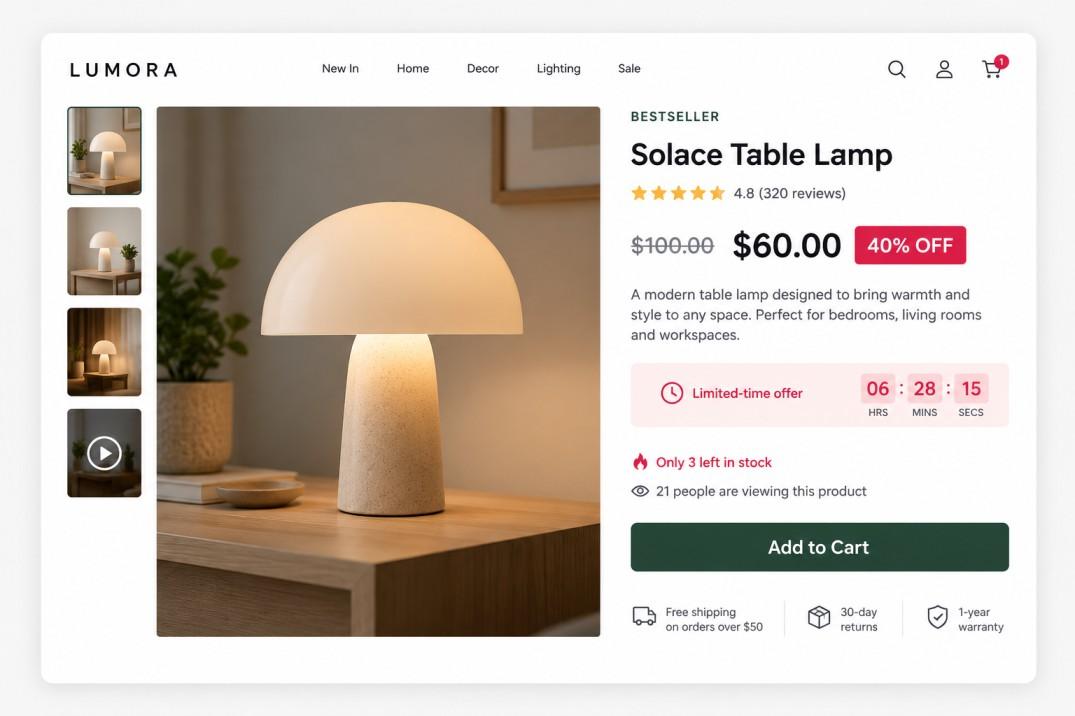
I know what you're thinking: everything looks normal. The original price is crossed out, the new price is lower, and a bright badge tells you exactly how much you’re saving. A classic textbook bargain.
But there’s one detail the image cannot tell you - was that $100 price ever genuine?
This is where inflated reference prices come in. Some retailers raise prices before a sale, keep products permanently discounted, or compare their selling price against an MSRP that bears little resemblance to what customers actually pay. The bigger the crossed-out number, the more impressive the saving looks.
The FTC’s Guides Against Deceptive Pricing draw a line around these comparisons. An advertised MSRP should reflect a price at which substantial sales actually occur in the retailer's trade area. Otherwise, that impressive markdown could give shoppers a misleading picture of the deal.
Amazon ran into this issue in 2021 when six district attorneys challenged how it used “Was” and “List” prices to advertise savings. A product listed at $19.99 beside a crossed-out $29.99 price looks like a ten-dollar bargain. But what exactly did that $29.99 represent, and how had Amazon arrived at it?
Amazon agreed to pay $2 million in penalties, costs, and restitution and revise its pricing disclosures to explain how it determined and validated those reference prices.
So your discount badge can do plenty of selling, but it can be classified as a dark pattern if the price behind it isn’t backed by a paper trail.
Basket sneaking and default upgrades
Picture this - you budgeted for a new phone. But somewhere between the product page and checkout, a $3.99 greeting card has joined the order.
This is called basket sneaking. It happens when a store adds an extra product to a shopper's cart without a clear, affirmative choice, sometimes through a prechecked box. A closely related pattern is preselection, where the site automatically picks the option that benefits the merchant.
The FTC's dark patterns report identifies both practices as ways of steering shoppers into purchases they may never have intended to make.
And a study of 53,000 product pages across 11,000 shopping websites found a flower retailer that automatically added a $3.99 greeting card even when the shopper had requested none. Another store used a prechecked box to add a $4.99 screen protector to the order.
The distinction for merchants is simple - an upsell should be an invitation, not a surprise.
For instance, merchants offering SureBright's product protection as an add-on let shoppers actively choose whether to include it in their order. And for customers who skip it at checkout, they can still offer another opportunity to purchase coverage 30-90 days after the purchase. That way, the option stays open without quietly slipping an extra charge into someone’s cart.
Drip pricing or hidden checkout fees
A customer who ordered armchairs from World Market’s website in 2024 alleged that the advertized price suddenly picked up a $49.95 oversized-item surcharge and another $50 for shipping and handling at checkout.
The case is a textbook example of drip pricing - advertising an attractive headline price, then revealing mandatory charges later in the buying process.
A lower advertised price can help win the initial price comparison, and shoppers who have already spent time choosing a product may be reluctant to abandon the purchase over an extra fee.
But California's Honest Pricing Law requires most businesses to include mandatory fees in advertised prices, subject to specific exceptions for taxes and shipping costs. So giving in to the temptation to keep those charges under wraps could land you in an entirely avoidable regulatory crossfire.
Subscription traps with difficult cancellations
Have you ever stayed in a toxic relationship because ending it seemed like more work than putting up with another miserable week? Some subscription services seem to run on that same calculation.
“The amount of artificial barriers to stop us from canceling a subscription is insane.”
That is how one Reddit user documented a subscription cancellation attempt that involved six pages, two ads, a survey, a discounted offer, and three rounds of buttons switching places.
But dig a little deeper and you’ll find that there is a method to this madness.
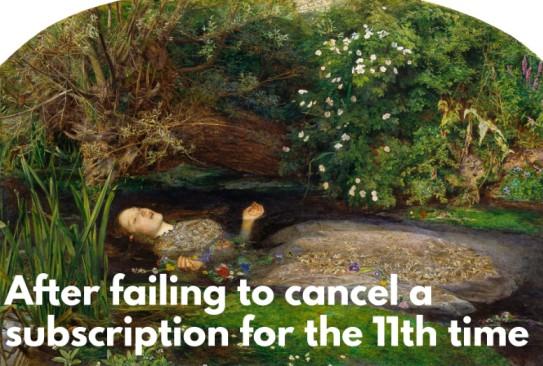
Every extra screen, retention offer, or phone call gives the customer another chance to give up and let one more billing cycle roll in. Some merchants start building that friction much earlier, with free trials that quietly become paid plans, renewal charges buried in fine print or memberships slipped into unrelated checkouts.
In a lot of these cases the signup takes seconds, but the exit becomes a project.
For online subscriptions, Restore Online Shoppers' Confidence Act (ROSCA) requires clear disclosure of material terms, express informed consent before charging customers, and simple ways to stop recurring payments.
Amazon found out how expensive not following the rules could become. In September 2025, it agreed to a $2.5 billion settlement with the FTC over allegations that it enrolled millions of customers in its Prime membership without informed consent and made cancellations difficult. And to top it off, the settlement also required clearer signup disclosures and an obvious option to decline Prime.
But given how often Amazon surfaces in class action lawsuits, it may as well have an annual budget set aside for settlements. Your store on the other hand will have far less room to absorb even a fraction of that.
Fake reviews that manipulate social proof
Want to improve your product rating? Apparently, a postcard and an Amazon gift card can save you the trouble of improving the product itself.
One buyer discovered this rather interesting arrangement after purchasing a product with glowing reviews:
“I purchased an item on Amazon because it had great reviews. So far, it doesn't work as promised. However, I am giving it another few days to make sure but will probably return it. A couple days ago, I received a postcard offering an Amazon gift card if I give a 5 star review. Now those "great reviews" make sense to me- they are paid”
Well, well, well. Who knew the five-star rating had a little sneaky marketing budget behind it?
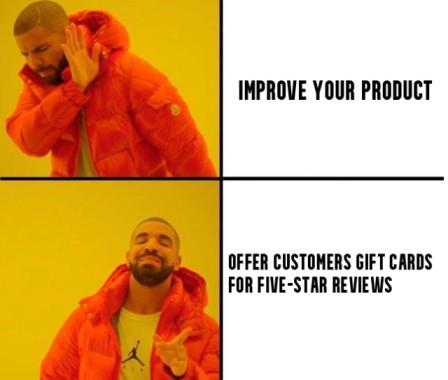
And paying customers to sing your praises is only one way to rig the picture. Some retailers keep the glowing reviews coming, but make sure the unhappy customers are kept out of sight.
Fashion Nova was accused by the FTC for automatically publishing four- and five-star reviews while holding lower-rated submissions for approval. In effect, shoppers browsing its website got a rather carefully curated version of customer happiness. The company settled the allegations for $4.2 million and was ordered to stop suppressing reviews.
The FTC's Consumer Reviews and Testimonials Rule prohibits fake reviews, incentives conditioned on a particular sentiment and specified forms of review suppression. Merchants can still reward customers for honest feedback, provided the reward is offered regardless of whether the review is positive or negative and material connections are properly disclosed.
Design choices that make saying no difficult
Ever seen a pop-up where “Accept” gets a big, bright button, while “Decline” is tucked away in tiny grey text? Technically, shoppers have a choice. But the design has already made one answer considerably easier.
Sometimes the manipulation goes beyond button placement. One version of this is popularly called "confirmshaming," where declining an offer comes with a little guilt trip. For instance, a customer rejecting a recurring subscription might be asked to click “No, I don't want to save money.” Another common trick is to make the preferred option visually prominent while burying the alternative.
Fortnite took confusing purchase controls to an expensive extreme where inconsistent button configurations caused players to make unwanted purchases, including when they were trying to preview items or wake the game from sleep mode. Epic Games agreed to a $245 million settlement to refund affected consumers.
So by all means, make your upsell attractive. But give the decline button the same clarity.
Finally, factor in the long-term cost of dark patterns
Holiday campaigns eventually wind down. The extra charges, unwanted subscriptions, refund requests, and angry support tickets can linger well into January. And so can the screenshots customers share when they feel a store has tried to pull a fast one.
A conversion is valuable. But the real cost of winning it through a misleading offer often shows up much later, in lost trust and customers who have little reason to return. Better to give shoppers a reason to feel good about the purchase than a reason to investigate it afterwards.

Author
Muskan Banga
Muskan is a content writer in the warranties and product protection industry, focused on demystifying and simplifying the industry for both her readers and herself. Her process begins with deep research, weaving in real-world examples to make complex ideas feel accessible and relatable. In her spare time, she obsessively devours Substack newsletters and books while losing herself in art films.